Category Archives: All Things Wordish

grammar, punctuation, usage, spelling, speech

Out of gas

A year or so ago, a run-down shopping center in our town gave itself a little facelift, and chose to illuminate its signage with neon. I considered it a good idea at the time—it suited the eclectic character of our commercial strip.

I did have one concern that indeed has come to pass. The risk of neon gas is that it runs out and, apparently, is an effort to refill or replace.

In my old D.C. neighborhood I shopped at “GIANT  OOD.” Recently, as I was driving home, I noticed that, after only a year after its facelift, at Kensington’s main intersection, stands “INGTON HOPPING CENTER.” (The S comes and goes, but how appropriate for Easter.)

It seems this neon gas shortage isn’t unique to my neck of the woods, as shown in photos others have posted.

How’s the neon supply in your ‘hood? 


1 Comment

Filed under All Things Wordish, Marketing/Advertising/PR

A crack in the idiom

My parents schooled me well on matters of language. Often they told me preemptively about common errors, so that I might avoid them later on. I’ve told you about some of these before (e.g., “waiting on” versus “waiting for”).

Coincidentally, as I was remembering another erroneous expression about which my father warned me long ago, I came across a column on the same subject.

Here we’ve covered malapropisms and funny mixed metaphors. We’ve even discussed useless phrases. But there is another category–expressions that are commonly accepted though, when examined more closely, make no sense. That’s what the column I read on Johnson, The Economist’s language blog, was all about.

I love the way Johnson describes it: “a reasonably common starter phrase that can evolve into a variant catchy enough to take root but close enough to the original and wrong in a subtle enough way for most people not to notice.”

There’s no name for such a thing, as best I know, but there are some examples to consider.

The one my father brought to my attention oh, so long ago: “It fell between the cracks.” Think about it. “Between the cracks.” To fall between the cracks, or slip between the cracks, has come to mean that something was lost—by slipping into a tiny space. Say you drop a small object on the floor. If it slips between the cracks, it’s not lost at all. Why?  Because what’s between the cracks? The wood. Even though “between the cracks” is commonly accepted, what we mean to say—and should say—is “through the cracks.”

By the way, the Johnson column begins by observing that, in British English, the words “between” and “among” do not necessarily have two different meanings, as they do in American English. I am going to assume my American readers know the difference. See me after class if you don’t.

The piece also discusses “head over heels,” another common expression that should really be “heels over head.” Visualize it and you’ll see why.

What other faulty idioms—English or American—can you think of, based on Johnson’s description? Is there a chance we can start a movement?

First, we need to come up with a name for it.

3 Comments

Filed under All Things Wordish, Family and Friends

Keep it short

Yesterday’s blog post was my shortest yet, a mere 72 words. Being that it was a tribute to my husband, I tried to keep it brief. He always says my best posts are the short ones.

Out of courtesy to readers, I try to keep my daily posts under 400 words in length. Sometimes a story takes more words to tell, while commentary can—and should—take fewer.

Packing more narrative into a smaller package is a challenge. It’s also what makes it fun. Often I begin by laying the raw content out on a slab. Later I go back and tidy things up. Think of a trash compactor – raw materials are deposited and fill up the bin quickly, but later become compacted into a dense package taking up less space. That’s how I look at writing.

Someone once said, “If I’d had more time, I would have written a shorter letter.” Try looking that one up. Variations have been attributed to Mark Twain, T.S. Eliot, Benjamin Franklin, Blaise Pascal, Abraham Lincoln, Thomas Jefferson, Lord Chesterfield, Samuel Johnson, Voltaire, Ernest Hemingway, Jean-Paul Sartre and George Bernard Shaw, among others.  If even 10 of these good fellows are posers, it just shows how valid a notion it is.

I’d like to become better at keeping it brief. These writers are correct – it does take more time. Anyone can ramble on. Just tiptoe through the blogosphere and you’ll see for yourself. Writers are ever challenged to scour our text for extraneous words and phrases, and eliminate or replace them with more potent substitutes.

Educators in Virginia recently took heat for having students use Twitter for some of their assignments. I thought it was a novel idea. Having kids keep their writing to fewer than 140 characters is an exercise in brevity. Yes, one day they’ll be writing 10-page term papers, and didn’t we all perfect the art of filling blue books and typing paper with loquacious ramblings and flowery phrases?

The test is the ability to serve up meaty content in as manageable a container as even the most attention-challenged reader will digest and, perhaps more important, to know when to stop.

Yesterday, one of my favorite groups, “Fake AP Stylebook,” suggested: “Running out of space? Just end abruptly with, “Only time will tell if this development resolves the issue.”

(388 words)

1 Comment

Filed under All Things Wordish, Quotes, Technology and Social Media

It is what it is is

When readers write in and ask me to air their peeves in this space, I try to oblige.

What I’ll call the double-is has come up at least twice here—and it bothers me as well—so let’s get it out there.

“The problem is is . . .” “The thing is is that . . .”

I began hearing this about 10 years ago and it’s still going strong.

I even hear, “. . . was is . . .”

Now let’s be careful to not put a false ban on the double-is because there are times when it is correct, such as when the first “is” is part of clause; or when “is,” in quotations, is used as a noun.

Correct:  “What the problem is is a lack of understanding.”
Incorrect: “The problem is is a lack of understanding.”

The first one is correct because “what the problem is” is a clause. Think of it this way:  The clause stands for one word. It is the subject of the sentence, and it just happens that the cause ends with the same word as the verb in the sentence. (I suppose you could insert an illegal comma in between the two, but I wouldn’t recommend it.) 

“The problem is is” is incorrect because “the problem ” is the subject and “is” is the verb. Only one verb is needed.

Somewhere along the way, people began to confuse the two, and started packing and extra “is” either for emergencies or, as is often the case, to sound more intelligent. Listen for it.

Or, if a visual would help, watch this explanation:

Now if we could only get the people we know who do this to read this blog, Sigh.

13 Comments

Filed under All Things Wordish

Metaphorically mis-speaking

Did you ever hear a string of words coming out of your mouth and then wish you could inhale them back in before they reached anyone else’s ears? Not because you want to savor them but because they didn’t come out the way they should have?

I’m not referring to rude or hurtful comments or words that come back to bite us; just words that inadvertently come out the wrong way—maybe the wrong metaphor or worse, an unsavory one.

I heard both within just a few seconds on this morning’s local news.

The local NBC news team was doing a segment on the DC101 Chili Cook-Off, coming up in Washington on May 21st. In advance of the annual event, WRC, the local NBC affiliate, held a promotional chili tasting in the NBC cafeteria.

Setting up the piece, WRC anchor Kimberly Suiters announced to viewers that seeing all the chili “will wet your whistle.”

I assume—I hope—she knew as soon as she uttered those words that what she meant to say was “whet your appetite.” I’ve never known chili to wet one’s whistle. Water wets a whistle or, metaphorically speaking, quenches one’s thirst. Honest mistake, but also an opportunity to point out here that it is whet one’s appetite, not wet one’s appetite. FYI, to whet is to sharpen or to stimulate.
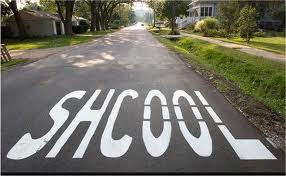

Suiters then threw it to reporter Jim Handly, who surely cringed when he heard himself announce that the Cook-Off would feature “chili out the wazoo.” Not exactly a visual DC101 was aiming for, I suspect.

I vote for giving these two metaphorical mulligans.

1 Comment

Filed under All Things Wordish, Food, Movies, Television and Radio, Music, News

Occupational hazard

On Wednesday, when I wrote from a sleep deprived state about insomnia, there was one typo I hadn’t caught. Frankly, I was surprised there was only one. Readers Polly and Ellen were kind to point it out to me so that I could go back and correct it.

Fellow blogger Dennis would likely say that there’s no need to correct the typos; he believes that blogs are authentic messages from the heart, not to be over-thought or over-edited. Dennis is probably right, except when one publishes a blog that focuses largely on proper language and spelling.

I am reminded of a column that appeared in The Washington Post last month, entitled “The danger in writing about typos? Making one yourself.”

Earlier, columnist John Kelly had written a column about signs containing embarrassing typos, in which he made at least two himself. Readers noticed. They’ll do that.

Kelly faced his mistakes, laughed at himself and bowed to readers who no doubt were suggesting that, “when one is a pot, it is best not to call the kettle black.”

If that were the case, this blog would have to close up shop (and not just for April Fool’s Day).

We’re all human. We make mistakes. But doesn’t mean we can’t tee-hee at others in good fun, does it?

I think as long as we are willing to laugh at our own mistakes first, then we can snicker at funny typos.

1 Comment

Filed under All Things Wordish, News, Technology and Social Media

Don’t go it alone

As I woke up again on the West Coast this morning, with nary an idea for what to say today, I received a comment from a reader and fellow WordPress blogger, Olga, who teaches English in Russia.

Olga said, “I’d be interested in your opinion as a Word Nymph on learning foreign languages by oneself,” and pointed me to her post on the same subject. I scrolled through a few more e-mail messages that came in overnight. There was a piece of spam, with the subject heading, “Want to learn a new language fast? This contained a link that would not open. But Olga and this spammer got me thinking.

In her post, Olga converses with her reader, Yulia, about the pros and cons of teaching oneself a second, or third or fourth, language. This dialogue is quite interesting, especially as it takes place in English between two non-native speakers, who both write English extremely well. But that’s not the point.

I once learned Spanish, but it took me four years attending a university—and time studying in Spain—to do it. Lack of practice over 30 years has placed me closer to the starting line that I’d like.

As Yulia points out, it’s possible to learn the fundamentals of grammar and sentence structure from a book, but pronunciation is more difficult to learn in isolation. We need to hear words pronounced, we need to practice our pronunciation in the presence of others. Tapes can be helpful, but digital media don’t converse. It is in conversing that we learn.

It’s not that teaching oneself can’t be done. I know that because my son taught himself Italian at age 10. Of course, he didn’t become fluent; his goal was to be able to read a menu and order his own meals while on vacation with us in Tuscany. He had received a pocket-sized workbook for Christmas, took it to school and studied it every afternoon in after school care, while sitting in a corner alone. At least that’s what his day care providers told me. Indeed, when we arrived in Italy the following July, he had amassed an impressive vocabulary of practical words and phrases. Even though he learned in a vacuum, his pronunciation was pretty good as well and he exercised his new skill with confidence.

Likewise, my father is in the process 0f teaching himself Spanish. When he began thinking about retirement, he decided this was something he ought to do. (I was voting for his learning the computer).

My father is making good progress, but he would do well to perfect his pronunciation through practice, something he is doing right now, in fact.

I believe strongly that learning—learning almost anything—best happens in community. Ideas can’t be exchanged in even a hundred years of solitude and, while it is possible to read a book, or listen to or mimic tapes, it is in the conversing that learning a language happens.

Based on my experience, I’d recommend taking a class, forming a study group, seeking out kindred spirits and doing it together. Support one another, exchange ideas, draw each other out of your shells.

And, take it from me, a little sangria never hurts.

7 Comments

Filed under All Things Wordish, Family and Friends, Travel

Any way you couch it

Over the past week I’ve solicited suggestions for topics to cover here. It’s my version of taking requests. While I chew on those having to do with synchronicity, semantic infiltration and the origin of “draconian,” I thought I’d start off with an easier one.

Sue wrote: “How about writing a blog on the use of couch, sofa, divan?”

I don’t know precisely what Sue would like to know, but I have two initial observations. One is that, while the proper name for this piece of furniture is “sofa,” many people call it–correctly or incorrectly–a couch. My other reaction is that there appear to be so many other names for this object. Immediately I thought of about half a dozen.

So, Sue, jump in and take this conversation wherever you like. In the meantime, I’ll follow the two threads.

I was brought up to say “sofa,” which doesn’t make it right, but it also happens to be what furniture stores call it. They would know. I could be wrong, but I don’t believe you would ever enter a store—in person or online—and see something called a couch.

Isn’t “couch” is just a sloppy way to refer to a “sofa?”

I suspect “couch” comes from the French verb, coucher, or to lie down (I think that’s what it means; It could mean more, as in “Voulez vous coucher…”) When I hear “couch,” I envision someone lying, not sitting. A couch is where you spend a Sunday afternoon, watching football or, in my case, working the Sunday crossword under a fuzzy blanket for a committed period of time. Otherwise, with or without someone sitting on it, it’s a sofa.

What else could it be? As Sue points out, it could be a divan. I had an aunt and uncle who called theirs a divan, a term I thought was perhaps unique to their generation. Apparently,” divan” is Turkish in origin; how it got from Turkey to my aunt and uncle is unknown to me. If memory serves, these same relatives might also have called it a Davenport, which I understand was a brand name (like the Norge).

I understand Canadians call theirs a chesterfield.

As far as I know, chesterfields, divans, Davenports, couches and sofas are pretty much alike structurally. Then you get into your settees, love seats, fainting couches and futons.

I can speculate about how these variations came about, whether they are separated by generations, by regions or by structural properties. Better yet, The Word Detective explores this matter in much more detail, so let’s benefit from his research. If that doesn’t do it for you, there are many more blogs that delve into all the nuances.

Or you can consult this sofa and living room furniture glossary. Notice, nowhere in the glossary will you find “couch.”