
Twice recently, I noticed a system of healthful habits being described as a regime.
The first reference was in a rerun of The Dick Van Dyke Show, in which Sally Rogers referred to her new diet regime. My ear twitched a bit, recognizing a potential misuse of regimen, while I also considered it might have been a colloquialism of its time some half a century ago.
Then yesterday, I read the same use in the Washington Post’s Health & Science section, in which the author of a recent book assured readers that, in order to age healthfully, they needn’t “go all out with a major fitness regime…” Prior to this, the only regimes I’d read about in the Post were systems of governmental power. I made a note to investigate.
My first scratch into the matter had me feeling pretty cocky. Indeed, the definitions I located defined a regime as a form of government (e.g., a fascist regime), a government in power, a prevailing social system or pattern, a period during which a particular administration or system prevails.
My cockiness wilted when I read an alternate definition—“a regulated system, as of diet and exercise; a regimen”—but I had just enough left to fuel one more regimen-related peeve.

Healthy Regiment
I have a friend who likes to refer to her “regiment” of eating fruits and vegetables. My friend is not alone; the internet has no shortage of references to healthy regiments.
No matter how you slice your produce, there’s no room to rationalize that one. A regiment is an army unit. Period.
One of my favorite sources of analysis on such matters, the Visual Thesaurus, has a thoughtful explanation of regime v. regimen, pulling from various medical publications and etymological authorities to compare the two. They explain that regimen and regime are known as “doublets,” two words that have entered the language from the same source by different routes. They further advise, “If you use regime, you can be confident that you have a couple of centuries of accepted usage on your side. But if you want to make sure you don’t set off anyone’s pet-peeve alarms, stick with regimen.”
So technically, Sally Rogers and the Post are correct, though regime in this context appears to still bother many healthcare professionals. And me.
Nevertheless, Visual Thesaurus states, “Anyone who confuses regimen and regiment betrays ignorance of an elementary verbal distinction.”
They said it, not I.
 As you know, I’ve since met dozens, if not hundreds, of North Carolinians, and have come to enjoy their colloquialisms. Might could is one I still hear a lot but, as many Southerners as I know, I don’t recall ever hearing it from anyone from South Carolina or Tennessee or Georgia or Arkansas or Alabama. No matter.
 Like many newspapers, the Post has suffered sizeable cutbacks in recent years, many of which have hit the editing team. Up to now, when I’ve noticed an occasional typo or less occasional grammatical, spelling or punctuation error in my hometown paper, my reaction has been more sympathetic than critical.
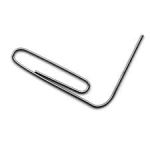 Jury rigged? Hmm. I didn’t know that, but later learned that jury rigging (no Casey Anthony jokes) is a sailing term.
 It goes on to explain that “the adjectival use of ‘jury’ in the sense of makeshift or temporary dates from at least 1616, when it appeared in John Smith’s A Description of New England” and lays out
  Urban Dictionary explains that “jerry” has come to refer to something that is bad or defective: “a pejorative use of the male nickname Jerry.” Jerry as a pejorative? I didn’t know this either; did you?
 All the while I was poring over these contemporary sources, what was really lingering in the back of my mind was Michael Jackson’s 1980s jeri curl.
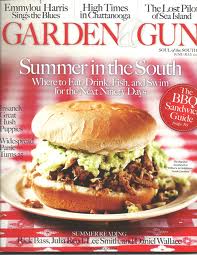 The magazine’s full title is Garden & Gun: The Soul of the South and, obviously, covers all things Southern. This week I decided to crack open the last two issues—while I was in the middle of reading something else, no doubt.
 For those who don’t remember, Mad Libs were–still are, I guess–short stories written with blanks in them. The blanks call for certain parts of speech to be inserted in various places in sentences within the story. The person who holds the book asks his or her play mates for nouns, verbs, adjectives, adverbs and exclamations, and occasionally, names of body parts or famous people, which, of course, are provided arbitrarily and without context. After all the blanks are filled, the holder of the book reads the story aloud. Hilarity ensues.
 Our nation’s capital is host to millions of tourists. The crowds can be overwhelming, for them and for us. Our grid can be confusing and our subway system can be intimidating to the unfamiliar. I try to be a gracious host by making visitors feel welcome and helping them find their way around along the streets or on the Metro. I know I’m not alone.
 When I wrote a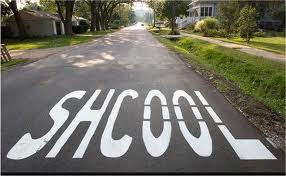
 Word Nymph