
From time to time I ask you to indulge my curiosity about a matter of language, especially when I’m stumped.
 Recently, you helped me with “one of the more” versus “one of the most,” though no one cited an authoritative source as I had hoped. It seems many of us know how an idea should be expressed in words, but we don’t always know why. I like to know why.
Here’s another one that has had me stumped for years, decades actually; I just never bothered to drill into it.
It was nearly 20 years ago that I began to wonder what the difference was between nouns ending in “ence” and those ending in “ency.”
A leadership phrase swept the corporate world decades ago: “core competency.” All through the ’80s and ’90s, the company for which I worked kept tens of thousands of employees busy perfecting and touting our core competencies. I wondered then what the difference was between competency and competence.
Lately, I’ve wondered about the other “ence” nouns: resilience, dependence, independence, even interdependence. They all have “ency” alternatives.
The question of the day is: Are there specific instances in which “ence” is correct but “ency” is not and vice versa?
Generally speaking, the answer isn’t easy to find, not for me, anyway. When you consult a dictionary, the answer is no.
My first sweep through a dictionary revealed that, in most cases, one is an alternate use, or more or less common use, of the other. In other words, they mean the same thing.
I wasn’t going to take that at face value. There had to be nuances beneath.
Not surprisingly, there are esoteric distinctions. For example, dependence is a term specific to the fields of mathematics and science.
As I often do when I go a-hunting for the truth and don’t find it in the dictionaries or stylebooks, I poke my head into an online chat. After a long night of peeking and poking, I came closer to gleaning the differences.
The “ence” noun pertains to a state of being: of being competent, dependent, independent, resilient. The “ency” form suggests a degree of that state, based on specific attributes.
For example, competence is the ability to perform a task, while competency is the knowledge, skills and abilities that distinguish superior performer from an average one.
Resilience is the ability of something to return to its original condition after being stretched or compressed, while resiliency is the physical (or mental) property that enables something or someone to return to its original condition.
Am I drawing an accurate conclusion or just searching for absolute truth where none exists?
Once again, your opinion is welcome, and your sources even more so.
Perhaps I just need a crash course in mining.
 In elementary school, these adjectival forms were presented in a nursery rhyme beginnig with “Good, Better, Best.” If it weren’t for the fact that I often hear the superlative used incorrectly, I’d say there’s no need for a refresher. (Better, the comparative, pertains to two items, as in “She is the older of the two children.” Best, the superlative, pertains to three or more, as in “He is the tallest boy in the class.”) I’ll come back to violation peeves in a moment, though I’ve griped before.
 The examples I’ve come across in my research aren’t very polite; I suppose that’s why they are what they are. There are countless dysphemisms for using the restroom. My son used an ugly one recently, so ugly I must have put it out of my mind. I remember only that he used it in front of his grandfather.
 About.com’s Grammar & Composition site
 There wasn’t as much time as I had hoped yesterday to read my new Euphemisms
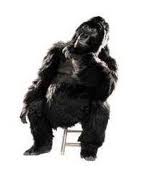 Pick one, guys. It’s either “the 800-pound gorilla” or “the elephant in the room.” These expressions mean two different things, the latter being more apt for Axa’s campaign. Perhaps the elephant failed the audition.
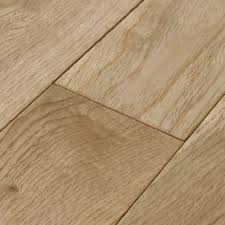 The one my father brought to my attention oh, so long ago: “It fell between the cracks.” Think about it. “Between the cracks.” To fall between the cracks, or slip between the cracks, has come to mean that something was lost—by slipping into a tiny space. Say you drop a small object on the floor. If it slips between the cracks, it’s not lost at all. Why? Because what’s between the cracks? The wood. Even though “between the cracks” is commonly accepted, what we mean to say—and should say—is “through the cracks.”
 I assume—I hope—she knew as soon as she uttered those words that what she meant to say was “whet your appetite.” I’ve never known chili to wet one’s whistle. Water wets a whistle or, metaphorically speaking, quenches one’s thirst. Honest mistake, but also an opportunity to point out here that it is whet one’s appetite, not wet one’s appetite. FYI, to whet is to sharpen or to stimulate.
 How will you honor the occasion, after digesting your daily dose of Word Nymph, of course?
 Word Nymph