Category Archives: All Things Wordish

grammar, punctuation, usage, spelling, speech

A wicked good read

In December, I received the book Wicked: The Life and Times of the Wicked Witch of the West for my birthday. I had just seen the play and had heard the book upon which it was based was excellent.

It’s now March and I’m on page 28. At this rate, I’ll do well to finish the book before my next birthday.

This isn’t because I’m not enjoying Wicked. On the contrary, it’s because I am.

I like to read, but I don’t finish more than about two or three books a year. The better the book, the longer it takes me. Sure, I can polish off a Nora Roberts trilogy in one beach vacation. That’s like slurping up a triple scoop hot fudge sundae—no chewing involved, except for the crunchy sprinkles of guilty indulgence.

Newspapers, magazines and online news and opinion consume a healthy share of my reading.

Books are different. For me, a really good read isn’t always a page-turner. It’s not always a sundae. It’s a protracted dinner composed of superbly seasoned courses, savored slowly to appreciate each nuance. Like a good dish, a well-written sentence might hit the cranial taste buds with a burst of garlic, and leave a hint of smoked poblano on the back side.

The reason it’s taking me so long to read Wicked is that I am re-reading—and re-re-reading—each sentence. I enjoy each one so much that it pains me to move on.

To say author Gregory Maguire has a way with words is akin to saying Julia Child made a decent bowl of onion soup.

Let me feed you a few bites, just to whet your appetite:

“In the kitchen yard Malena floated gently, not with the normal gravity of pregnancy but as if inflated, a huge balloon trailing its strings through the dirt. She carried a skillet in one hand and a few eggs and the whiskery tips of autumn chives in the other.”

“In the minister’s lodge, Malena struggled with consciousness as a pair of midwives went in and out of focus before her. One was a fishwife, the other a palsied crone.”

“’Look, a rainbow,’ said the senior, bobbing her head. A sickly scarf of colored light hung on the sky.”

“After the double blow of the birth and his public embarrassment, he was not yet up to professional engagements and sat whittling praying beads out of oak, scoring and inscribing them with emblems of the Namelessness of God.”

“Malena, groggy from pinlobble leaves as usual, arched an eyebrow in confusion.”

Hungry?

Watch for a full review, likely around year’s end.

4 Comments

Filed under All Things Wordish, Food, Reading

Oh happy day

Greetings, salutations and best wishes for the most festive of National Grammar Day celebrations.

How will you honor the occasion, after digesting your daily dose of Word Nymph, of course?
My personal observance of the day involved entering a copy editing contest sponsored by one of my favorite resources, Copyediting, whose tagline is “because language matters.” Amen.

The contest closed at 9:00 a.m. yesterday. Now I wait for winners to be announced. Make that “Now I wait for Copyediting to announce the winners.” Active voice.

This past year we have celebrated National Punctuation Day and National Dictionary Day together, so it’s only fitting that we be together online today. Be, present subjunctive.

We come to this place throughout the year to ask questions, admit our faults and, yes, occasionally, to preach. We laugh at the idiocies of language, at each other and at ourselves.

This reminds me of the motto of my church, which begins with “We welcome the faithful, the seeker and the doubter.” At the risk of being irreverent, and/ or breaking the eighth commandment, I think it applies in this place as well.

Word Nymph invites you to honor this day by celebrating the notion that language does indeed matter. None of us is born knowing language. Is, singular. We learn to communicate as children and we continue to learn as adults. We believe, we seek, we doubt. And I like to think we have good fun in the process.

Happy National Grammar Day. May the occasion bring us all continued thirst for delightful language.

Oh, and if I win that copy editing contest, I’m taking my Quick Check Editorial Reference Cards and heading out for a wild time.

6 Comments

Filed under All Things Wordish, Holidays, Technology and Social Media

The skinny on pants

Ladies and gentlemen, have you bought your skimmers yet?

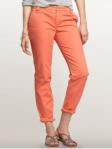
For the uninitiated, as I was until yesterday, skimmers are the new pants length. Translation:  too short.

Ladies, skimmers are the spring sequel to jeggings. They’re much longer than last decade’s Capris and slightly longer than last year’s crops, but awkwardly shorter than full length pants.

Gentlemen, a fashion expert on one of the morning news programs did say recently that even men would be wearing the new length this season. I can’t wait to see how you adapt to this.
This early in the season, the new styles look utterly ridiculous. I bought three pairs.

For the benefit of readers who haven’t yet ventured into stores for their spring fashions, I thought it might be helpful to provide a little overview of this year’s pants scene, or at least my observations anyway, so you can approach the stores with a reasonable expectation.

First, the lingo. GAP is pushing something called the Broken-in Skimmer. This means intentionally wrinkled and too short. The first thing I did when I got mine home was iron the dickens out of them.

The pants-centric GAP is also featuring the Skinny Cargo, the Skinny Camo and the Skinny Twill, as well as the Pure Body Foldover Drawstring Pant and the Tapered Boyfriend Pant. (For an early Nymph musing on the boyfriend craze and other fashion nonsense, see Fashion Nonsense.)

J. Crew is pushing us to show off our ankles as well, with the Cammy Pant, the Day-tripper Pant, the Pipette Cargo Pant, the Canteen Pant, the Bistro Pant, the Café Capri and my favorite, the Broken-in Boyfriend Pant. I trust this means last year’s boyfriend is now fully broken in; translation: wrinkled.

Now allow me to desensitize you to a frightening fashion comeback, just so you aren’t visibly shocked when you walk in the store. As I feared would one day happen, Mom pants are back. Remember these?

Well, they’re alive and well at H&M, complete with the nine-inch zipper, ample front pleats and elastic waist, ready to be given a good home on your backside. What’s next, the perm?

5 Comments

Filed under All Things Wordish, Beauty and Fashion, Movies, Television and Radio

Slang dunk

Here’s a little quiz. In Paul Simon’s song, is “Me and Julio down by the school yard” grammatically correct? The answer: It depends.

This isn’t a post about song lyrics peppered with poor grammar; we’ve already covered that. But let’s take a lesson from me and Julio.

It’s frustrating for us wordies to stand by and witness blatantly bad grammar sliding by as accepted slang. Where are the authorities?

Many parents have given up on correcting children who say “Me and Brittany are going to the mall.” No one is around to apprehend young adults, having graduated from prestigious universities, who say “Me and Justin went out last night.” It seems a lost cause, gone the way of “where are you at?”

That’s because such horrendous violations have gone colloquial. They’re trendy. They’re socially accepted. Some may think they’re cute, but they’re wrong and no one’s doing anything about it.

Assuming anyone cared enough to take this on as a cause, there’s one caution–let’s be careful not to allow history to repeat itself. Many of us learned long ago that “me and [anyone]” is wrong. The truth is that it’s wrong only half of the time. The problem is that some people who took this lesson literally as children are now committing an equally egregious violation as adults. Just as “Me and Brittany went to the mall” is incorrect, so is “She sent the invitation to John and I.” (“Me” is the object and “I” is the subject; it’s that easy.)

I’d like to issue three simple pleas to parents: One, don’t let your babies of whatever age get away with beginning a sentence with “Me and…” Two, don’t let your babies believe that “me” is inherently bad. Three, take the time to teach your children the difference between subjective (or nominative) and objective pronouns. I’d rather hear a kid say, “My Mom took me and Brittany to the mall” (which is technically correct) than “My Mom took Brittany and I to the mall,” which is not.

Still confused? That’s okay. Here’s a place to start if you need a primer. 

Just between you and me, in the context of the song, I think “me and Julio” is correct. We’ll discuss why in the comments, if need be.

8 Comments

Filed under All Things Wordish

The award goes to…

Last night’s Academy Awards  can be summed up in one word: “amazing.”

I’m not talking about the production or the fashions or the performances. I’m talking about the word I’m voting most overused.

Heard on the red carpet:

“This is an amazing night.”
“You have an amazing figure.”
“We’re going to have an amazing time.”
“It’s great to be in the company of these amazing actors.”
“Just look at all these amazing people.”
“You look amazing.”
“Your earrings are amazing.”

I’ve noticed this adjective with an appropriately limited definition has gone epidemic (so has “viral;” that’s why I say “epidemic.”). But if there were any doubt, all anyone would have to do to confirm the diagnosis is watch the Oscars.

The awards program itself was sprinkled with “amazing.” Admittedly, I’d find just being in the Kodak Theatre on such an occasion amazing. So I’ll cut some slack to those who say it feels amazing to be up on that stage to receive a statue.

My point is, let’s save “amazing” for the truly amazing, as we’ve talked about doing with other overused adjectives. Not for earrings.

This morning’s online headlines illustrate this point.

“Jennifer Hudson is amazing in orange at the Oscars”
Oscars: Amazing gowns offer red-carpet options”
Oscars Best Dressed! Check out the Amazing Academy Awards (this one also notes how amazing Celine Dion looks post-twins.)

I even found a recipe for “Amazing Academy Award-winning Appetizers.” How amazing can a pig in a blanket be, unless perhaps it involves a live pig?

Even the JCPenney commercials played along last night: “We make it affordable; you make it amazing.”

Amazing.

8 Comments

Filed under All Things Wordish, Beauty and Fashion, Marketing/Advertising/PR, Movies, Television and Radio, Rants and Raves

Feed me

I’ve been at this blog experiment for almost 11 months now and I’ll be honest, there are times when utter panic sets in.

Within my six-days-a-week writing schedule, anxiety over coming up with a topic takes hold about three times a week. Usually, after taking a pause and deep breath, sometimes walking away, the light bulb comes on—sometimes a really dim bulb—and the writing flows.

One of my greatest concerns about writing so frequently is that the content will become diluted or seem forced. And often it does.

When Word Nymph was born in March of last year, it was fun. It was new. The ideas and the writing flowed effortlessly. Today, I’ve sat here for hours, staring at a blank screen, having scoured newspapers, magazines, my bookcase, my imagination and all my online sources. Nada.

Just as my palms got clammy and my heart raced to a frightening clip, I remembered a blog post my cousin pointed me to earlier in the week. It made me feel better and worse at the same time.

This remarkable blogger, writing under the name of The Digital Cuttlefish, articulated graphically the challenges of keeping up with a daily blog. In a post entitled The Care and Feeding of Dragons, the writer first puts forth an unattributed quote:  “A blog is like a dragon. You have to feed it all the time and sometimes you get burned.”
In the post, Mr. or Ms. Cuttlefish hit the nail on the head. Blogging is easy at first. But, like the dragon, this beast must be fed, preferably a meaty and steady diet, or it will eat you alive.

I took a tiny bit of comfort in Cuttlefish’s words because I no longer felt alone in my anxiety. Also, Cuttlefish put a face to my fear with this hungry dragon.

Once I finished reading the Dragon post and scrolled down to get a feel for Cuttlefish’s other writings, my jaw dropped. I could no longer put myself in the company of this blogger. Yes, he/she too posts about six days a week. But every post—every single post—is written in rhyme.

I must know: What does the Digital Cuttlefish eat for breakfast?

4 Comments

Filed under All Things Wordish, Reading, Technology and Social Media

It’s alive!

Yesterday we talked about the language of wine. It seems I left out half of the equation–the cheese. I wrote about oenophiles but ignored the poor turophiles.

Readers commented to me on and off line that cheese descriptions can be just as confusing or haughty as ones pertaining to wine.

Upon waking this morning, I pulled my copy of The Cheese Course off the shelf. This book is mostly about the preparation of cheese dishes, but there’s an introductory section I found amusing. Author Janet Fletcher wrote in 2000 that “We Americans are clearly in the midst of a cheese revolution.” How did I miss that? Also, I’m fairly certain, if I were editing this book, that I’d have found a better place for the discussion about cutting the cheese than in the Cheese Etiquette section.

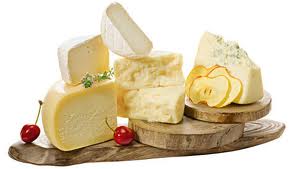
I then embarked on some further exploration of online cheese glossaries. What struck me about the descriptions of cheese flavors was how many are human traits. One cheese might be “mild-mannered” while another “assertive.” One might be “weeping” while another “gassy.” And don’t we all know at least one human, maybe old Uncle Cletus, whom everyone in the family regards as “barnyardy?”

Sorry, I know that was cheesy.

3 Comments

Filed under All Things Wordish, Food, Reading

Château de prétense

I take some risks in raising today’s topic.

First, I fear I may offend readers who take their wine language seriously. Second, I may reveal too much about how little I really know about it.

I enjoy wine. I have a fairly sharp palate that can distinguish among varietals and detect flavors to a reasonable degree. I know what I like and what I don’t and, generally, which wines go well with what foods.

This said, I tread lightly into the language of wine. This might be because I have not been exposed to the business of wine.

I’ve never set foot in a vineyard, never taken a winery tour. I went to a tasting once. In 1982.

Restaurant tasting menus are a rare indulgence, as much for the dining as for the descriptions of the wine pairings. I trust a sommelier and find the pairings are always suitable. The real entertainment, though, comes in his or her descriptions of the wine. Keeping a straight face during the performance is always a challenge. I almost had to excuse myself at Babbo in New York when the sommelier assured us that the wine wouldn’t bully our mushrooms.

Once I was having dinner with a friend at Zaytinya, which had just opened in Washington, D.C. The server had recommended a wine to go with our meal. She said, “I think you’ll find it approachable.” I had to turn my head so that I could roll my eyes.

We ordered this approachable wine and, when the server began to open it, the cork broke off in the bottle. My friend said, “I guess it’s not so approachable.” Our server was not amused.

Call me a bumpkin or call me a cynic, but call me up to here with ridiculous wine descriptions.

One of my favorite pokes at pretension comes from the movie Sideways. On a trip to Napa Valley with a friend, wine aficionado Miles, played by Paul Giamatti, sips, closes his eyes, plugs one ear and observes, “There’s the faintest soupçon of asparagus and just a flutter of Edam cheese.” (Impressive. I’d need at least 20 minutes to detect asparagus in my wine.)

Coco Krumme wrote a piece for Slate this week, separating expensive wines from inexpensive ones based on the language used to describe them. This sent me on an oenophilic cyber-journey, where I tried—honestly I did—to gain an understanding and appreciation of wine language.

But I stumbled upon a host of nouns and adjectives that I found a little hard to swallow.

I understand tannins. I understand finish. I’m willing to accept personality. But, while asparagus and Edam cheese, I hope, are satirical, any food stuffs beyond fruit or maybe chocolate are just silly. Tones of underbrush, animal or briar? Not particularly approachable.

Then, there are the adjectives. In an effort to be an earnest student, I consulted E. Robert Parker’s wine glossary.

Angular?  A wine that lacks roundness. Duuuuh.

Chewy, brawny and spiny? I think not.

Care to decant your favorite bogus wine descriptions?

15 Comments

Filed under All Things Wordish, Family and Friends, Food, Movies, Television and Radio, Rants and Raves

Tropical depression

Thirty days hath September,
April, June and November.
All the rest have thirty-one,
Except February, which lasts forever.

Another batch of snow fell on us yesterday. Not a deal-breaker, by any means; just enough to ugly up the landscape and annoy commuters. The sun has been scarce for way too long and there’s a piercing chill in the air.
Dreary doesn’t begin to describe it. What does?

I spent yesterday in a snit over having to wait at home all day for a county inspector who never showed. A hostage in my own home between 8:00 and 5:00, I was forced to confront an unsavory build-up of mundane tasks.

Inside was depressing; outside even more so. I didn’t want to be in either place. I was in the doldrums. Or did I have the doldrums? Which is it?

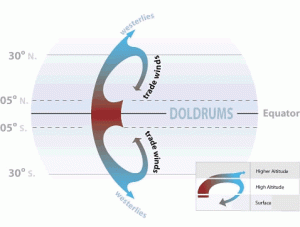
I looked up “doldrums” and was surprised to learn that it’s actually an oceanographic term. It seems that doldrums are regions of light ocean currents within the inter-tropical convergence zone near the equator. I didn’t know this. My husband, an oceanographer who specializes in ocean currents, didn’t either. I learned that the doldrums give rise to converging trade winds that produce clusters of convective thunderstorms.

In contrast, the doldrums are also defined as a period of stagnation, a slump, a period of depression or unhappy listlessness. This is what I had all right. Funny how the two definitions seem to be at odds, like hot and cold.

Still, I could sense how both meanings were descriptively apt. If you could have seen me yesterday, storming over the delinquent inspector, wanting to leave the house, yet fearing the February chill. A prisoner of bureaucratic breakdown and paralyzed by inertia. I was doldrums incarnate—a convective tempest trapped in a cross current of a stubborn winter and seasonal listlessness.

One word. Two meanings, both appropriate.

This storm too shall pass. It’s 21 degrees, but the sun has made an appearance.

3 Comments

Filed under All Things Wordish, Health, Hearth and Home, Rants and Raves

Tattered and torn

It’s 2011 and it seems a lot of hackneyed business jargon from the 1990s is still hanging around needlessly. I’m not clever enough to coin any replacements at the moment, but maybe if we clean out the closet we’ll have room for something new.

Like those short overalls from 1999 that were in for a summer and then vanished rapidly for their hideousness, or those jeans that still feel comfortable but are frayed along the bottom, so it goes with jargon.

A recent visit to a marketing firm’s blog got me thinking about this, though the topic has been on my mind for some time. The blogger laid out several business buzz words—some still fairly new—and invited suggested additions. I posted a comment:  “‘paradigm,’ ‘radar screen’ and ‘taking anything to the next level.’”

In the meantime, further exploration of a number of individual and company websites surfaced business lingo that, like those overalls, was cute for a while but is long out of style–and just won’t seem to die.

In previous blog conversations we’ve talked about empty phrases (“I’m just saying” and “it is what it is,” though let’s not re-ignite debate on the latter) and phrases that serve no purpose (“you know what?” and “at the end of the day”).

There are countless more plaguing business language. Surely I am not the only one who cringes to hear intelligent executives still throwing out tired phrases in hopes of sounding professionally hip.

In addition to paradigm, radar screen and taking it to the next level, here are my top nominations for 20th Century words that need to be pulled off the hanger and retired from circulation:

“Space,” when used to describe a market segment, industry sector or area of expertise

“Leverage,” when used as a verb

“Synergy” and any form thereof, such as synergistic

For businesses aiming to stand out as fresh thinkers, I’d further vote for phasing out any business metaphors that ran their course in the last millennium, including “picking low-hanging fruit” and “moving the needle.”

Oh, and “sweet spot.” Any others?

7 Comments

Filed under All Things Wordish, Marketing/Advertising/PR, Technology and Social Media