
It’s interesting where roads lead. Sometimes a little free association can take us down an amusing path to sparkling treasure.
For me, the starting point was ballroom dancing. As a freelancer, my flavor of the week can be just about anything; this time, it’s dancing. Often when I start a new writing project, I go to sleep with ideas swirling about, in hopes a few will collide and stir creative copy. Other times, it’s just dust.
While listening to the radio on Sunday, I sang along with Procol Harum’s “A Whiter Shade of Pale,” as I had a thousand times before. It’s a beautiful song. This time, though, I wondered what in the world it meant that “We skipped the light fandango.” I thought about it. Could the phrase be a variation on “trip the light fantastic?”
I always considered trip the light fantastic to be ritzy and glitzy, from another era. I’ve never found occasion to use it in conversation, and certainly never understood where it came from or what it even meant exactly. (For you younger readers, it means to dance nimbly or lightly in a pattern.)
On Monday I woke up mulling my latest writing challenge. Might there be a place for tripping the light fantastic? I looked it up to ensure I understood the meaning and origin of the expression. Good thing too because I learned that, not only did it come from Shakespeare’s The Tempest, but “tripping the light fantastic” was sixties drug lingo.
I continued searching. And I found a most delightful poem by John Milton, L’Allegro, published in 1645. It’s 150 lines long; I’ll share just the first excerpt that popped up:
Haste thee, Nymph, and bring with thee
Jest, and youthful Jollity,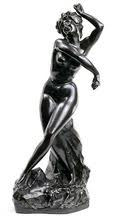
Quips and cranks and wanton wiles,
Nods and becks and wreathed smiles
Such as hang on Hebe’s cheek,
And love to live in dimple sleek;
Sport that wrinkled Care derides,
And Laughter holding both his sides.
Come, and trip it, as you go,
On the light fantastic toe;
And in thy right hand lead with thee
The mountain-nymph, sweet Liberty;
And, if I give thee honour due,
Mirth, admit me of thy crew,
To live with her, and live with thee,
In unreproved pleasures free …
Don’t you just love it?
Later in the poem, I found bonus words I’ll tuck away, should I ever be hired to write about beer:
To many a youth and many a maid,
Dancing in the chequer’d shade;
And young and old come forth to play
On a Sunshine Holyday
Till the live-long daylight fail,
Then to the spicy nut-brown ale.
So here’s to A Whiter Shade of Pale.

 Only recently have I thought about the words I learned in my adolescent years as a radio junkie. One day last week, while in the car, I remembered the first time I ever heard the word invincible. I wonder if you learned it from the same source.
 In a chat with friends yesterday, one said she had her whole service planned. Another said she’d leave the details to her mourners, while preferring to focus on the wake.
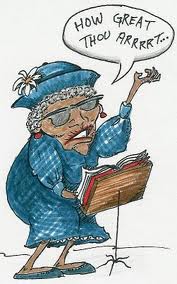 I’d like to avoid what happened at my mother-in-law’s funeral. As she was near the end of her life, she requested specifically that “How Great Thou Art”
  I hope it’s safe to divulge that I knew next to nothing about the play. Granted, it’s said to be the longest-running musical in the world, the third longest-running show in Broadway history, based on one of the most notable novels of the 19th century. I should have done my homework but, because the weekend sneaked up on me, I didn’t read up as I normally do before seeing a show.
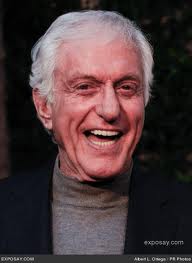 I can’t imagine a soul who doesn’t love Dick Van Dyke. No matter your age, you surely identify with at least one of his many happy-go-lucky characters. I’d be hard pressed to name a favorite – it would be a tie between Rob Petrie and Bert the chimney sweep.
 Elvis died August 16, 1977. It was as big a deal then—my senior year in high school—as Michael Jackson’s sudden death a couple of years ago.
 My brother had been Groucho for Halloween just that year. No, wait. It wasn’t Halloween; he just dressed and got made up like Groucho. I had a theatrical make-up kit that contained hair for mustaches and eyebrows, as well as greasepaint to draw circles under, and wrinkles around, the eyes. There’s a framed picture somewhere; I’ll have to see if I can find it. Stay tuned.
 So here’s how it works. The first player, who happened to be I the other night, surrenders her iPod to the leader, who pops it into the speaker system. When a song comes on, the rest of the group gives it a thumbs up, thumbs down or some sort of gesture that in essence means, make it stop—now. It’s a little like
  Everyone was encouraged to sing a song. There was no “Twinkle Twinkle Little Star.” The kids sang Broadway tunes or popular songs of the Fifties, Sixties and Seventies.
 Word Nymph