Category Archives: All Things Wordish

grammar, punctuation, usage, spelling, speech

Dunce upon a mattress

Several readers have asked me to discuss the difference between lie and lay.

I hadn’t obliged until now, primarily because I thought it obvious. Also, the worst offenders either don’t read language blogs or don’t care enough to bother. But maybe there’s room in the middle for a refresher.

Raise your hand if you know the difference between lie and lay.

You’d think mattress marketeers would know.

There’s a mattress commercial running lately that encourages shoppers to come in and “lay down.” ARRRGGGHHH!

I recently saw mention of another manufacturer’s product, called the “Lay Down and Sleep.” ARRRGGGHHH!

One of the oldest mattress retailers is known for its jingle, which begins “Lay on it …”

 
ARRRGGGHHH!

Now, I know plenty of people who “lay down” when they’re tired, “lay on the beach” on a sunny day or “lay in bed” on Saturday mornings. As I type this, even spell check is cringing.

I hate to have to even say it, but it’s lie. When we recline, we lie down—usually on a mattress.

I admit, it gets confusing when the past tense comes into play:

Present tense = lie (She lies awake at night.)
Past tense = lay (She lay awake last night.)
Past participle = lain (She has lain awake since midnight.)

When do we use lay? When there’s an object involved. We lay something down. We lay down the law. We lay a book on the table. Now I lay me down to sleep (technically, it should be reflexive, I lay myself down to sleep, but that spoils the meter of the prayer).

The tenses of lay are as follows:

Present tense = lay (Every year I lay a wreath on the grave.)
Past tense = laid (She laid a mat at the front door.)
Past participle = laid also (The hen has laid an egg every morning this week.

Dear readers (you know who you are), did I explain this clearly, as you requested?

Dear offenders (you know who you are), would you consider making better word choices?

Dear mattress makers (you know who you are, though chances are you’re not reading this), are your marketing agencies asleep on the job?

Maybe instead of “Lay on it, play on it,” they could sing “Lie on it, cry on it,” Lie on it, sigh on it,” “die on it,” “get high on it,” “eat pie on it,” WHATEVER.

To be fair, as lie versus lay goes, there’s bad behavior beyond the bed business. Just listen to some of your favorite songs and you’ll find some doozies.
5 Comments

Filed under All Things Wordish, Marketing/Advertising/PR, Rants and Raves

The new ‘shortly’

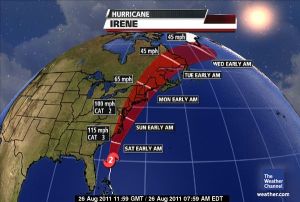
Greetings from the other side of Hurricane Irene.

I won’t judge whether the exclamation points and all-cap warnings The Weather Channel threw around last weekend were warranted, because Irene certainly punctuated her path across Caribbean and American territory. Those who remain without electrical power have every right to use every symbol on the keyboard to express themselves.

At our house, we just disposed of the 40 pounds of ice we socked away for the occasion, and are all too grateful to not have needed it. In fact, we were gleefully fortunate to not have lost more than a few pesky tree limbs.

Would I seem terribly ungrateful if I griped a wee bit about the 40 hours we had no television or Internet? I thought so.

Then how about if I just shared some innocent observations I made during that 40-hour period?

  1. I am far more addicted to TV and Internet than I ever imagined.
  2. I’m not proud of this.
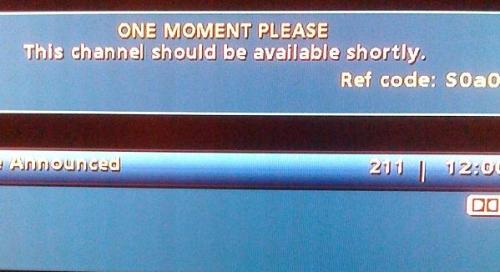
  3. The word “momentarily” is still widely misused. Hasn’t corporate America gotten it yet that it is not reassuring to hear that service will be restored momentarily? (I’d prefer it stay on a while.)
  4. The word “shortly” is subjective, but by no stretch does it mean 40 hours.
  5. Comcast customer service representatives are unprepared to answer the question, “How much longer will you use ‘shortly’?” Based on the awkward silence following my question, I kept my mouth shut about “momentarily.”
  6. When you call Comcast and press 2 to report an Internet outage, the recording suggests, if you do not care to continue to hold during this period of heavy call volume, that “you may also visit us on the Web at www.comcast.net for assistance.” Now why didn’t I think of that?
  7. When, following your call to the help desk, Comcast calls you back with an automated customer service survey, and you press 4 to indicate your call pertained to a disruption of service, you are told that they do not recognize this response and the survey ends there.
  8. My days as a loyal Comcast customer are over. Unless I find a friendly and reliable competitor, I’ll hold my nose and go with that other big company.
  9. The new Comcast—XFINITY—needs a new jingle. It’s not fun for me. Come on everyone, let’s dump XFINITY.
  10. It’s time to get back to work; I’m backed up by about 40 hours.
  

How many Moments are in 40 hours?

Momentarily? I hope not.

4 Comments

Filed under All Things Wordish, Rants and Raves, Technology and Social Media

Panic attack

Mark Twain was known to have said, “Everyone talks about the weather but no one does anything about it.”

As Hurricane Irene barrels toward the United States, the weather is all anyone is talking about. Someone, do something.

Usually, The Weather Channel is fairly tempered in its wording. Forecasters take such flak for both underestimating and over-hyping conditions that they must walk a fine line between issuing timely alerts and not inciting panic, even when conditions are urgent. By necessity, they choose their words cautiously.

In all the years I’ve followed The Weather Channel on weather.com, however, I’ve never read such strong language as I have these last 24 hours:

“extraordinary impacts”
“very dangerous”
“serious and multi-hazard threat”
“rare potency”
“particularly threatening situation”
“dire threat”

They’ve even created a new threat level category: EXTREME. All caps.

In fact, the site is using ALL CAPS and exclamation points all over the place! As drama goes, that’s the punctuation equivalent of Al Roker twisting in the wind.

Meteorologists caution that Irene will impose severe conditions on the major metropolitan areas of the Mid-Atlantic and Northeast, including Norfolk, Washington, Baltimore, Philadelphia, New York City, Hartford and Boston. “This hurricane has the potential to produce flooding rains, high winds, downed trees (on houses, cars, power lines) and widespread power outages,” the site warns.

One troubling aspect of this looming disaster is that, not only must East-coasters prepare for damage and loss, but we also have to brace ourselves for ridicule from the rest of the country. California is still snickering over our little 5.8 earthquake, while red state residents are blanketing Facebook and Twitter with stupid quake jokes about policymakers.

I seriously hope Irene has a change of heart and a change of direction. No one would look forward to singing “Goodnight Irene” more than beach dwellers and East Coast city folk. 

Now if you’ll excuse me, I need to dash out for an emergency supply of Perrier and camembert.

4 Comments

Filed under All Things Wordish, News, Technology and Social Media

Never let it rest

On several occasions recently, I’ve made a mental note to look up a specific rule of grammar pertaining to comparative and superlative adjectives. As is often the case, once I go searching, I find it’s not that easy.

In elementary school, these adjectival forms were presented in a nursery rhyme beginnig with “Good, Better, Best.” If it weren’t for the fact that I often hear the superlative used incorrectly, I’d say there’s no need for a refresher. (Better, the comparative, pertains to two items, as in “She is the older of the two children.” Best, the superlative, pertains to three or more, as in “He is the tallest boy in the class.”) I’ll come back to violation peeves in a moment, though I’ve griped before.

Here’s the use about which I was uncertain. Maybe you know.

Is it “one of the more…” or “one of the most…” and is there a difference? Finding a definitive—and authoritative–answer has taken deep mining.

To the ear, or my ear anyway, “one of the more” seems incorrect, simply because there are likely more than two nouns being compared. Without thinking too hard, I’d be inclined to say “one of the most.”

In fact, I was editing something yesterday when I came upon “one of the more” and changed it. Oops?

As I always do, I combed through my various style guides and grammar books and found nothing firm on the subject. However, I did read through volumes of online debate.

Some of the word usage bloggers insist that “one of the biggest” is absolutely incorrect, but I found their logic a bit flimsy. Others argued to the contrary.

I invite your comments on the subject. Does either comparative or superlative prevail when following “one of the” and why? Your opinions are welcome, but I’d really appreciate it if you’d cite your sources. Please don’t support your position with the notion that the other one sounds funny. We all know there are plenty of correct phrases in English that sound funny. As much as we might wish otherwise, not sounding funny is no basis for grammatical correctness.

Back to basic comparative and superlative, I wish people with two children stopped referring to one as the oldest and the other the youngest, when one is the older and the other the younger. Easy enough.

One blog I read cited lexicographer H.W. Fowler‘s assertion that exceptions can be made for idioms. I’m not sure I buy into that.

For example, if comparative (the –er form of an adjective) applies to only two, then why do humans put our “best foot forward?”

Likewise, why do we strive to have “the best of both worlds?”

This is one of the things that most keep me up at night. Or is it more?

5 Comments

Filed under All Things Wordish

Da bomb

Did the F-bomb recently fall off the list of most offensive curse words when I wasn’t paying attention?

More and more, I hear it creep into everyday conversation.

Don’t get me wrong; I’m neither sanctimonious nor hypocritical. I’ll drop the bomb when I drop something on my toe. In the safe company of friends and family, I’ll throw it around when I’m throwing a tantrum.

But I certainly don’t use the F word in public, and never, ever in the company of a stranger. Call me an old fogey. Conditioned at an early age, I still bristle when I hear it (not as much as G.D., but a close second).

Recently my husband and I were sliding our plastic trays through the line at a rest stop carryout. The people in front of us were stopped, holding up the line. We waited patiently.

Wishing to go around them but not wanting to take cutsies, I finally asked the woman, “Excuse me, are you waiting for an order?”

She replied, “Why, are we f—ing you up?” (I believe the word she was looking for was “holding.”)

We scooted around the waiting couple and got the heck out of there. Yes, heck.

Saturday night, we were having dinner at the bar in a neighborhood place. The dinner crowd had ebbed, so it was pretty quiet.

All of a sudden, I heard the woman beside me lash out at her partner, in an outside voice, “You’re just so f—ing impetuous!”

What’s the world coming to, gosh darn it?

3 Comments

Filed under All Things Wordish, Rants and Raves

A sign from above

I received an e-mail reminder last week of the coming of National Punctuation Day. As soon as there’s a nip in the air, I start planning a celebration and contemplating the meaning of these literary symbols in our lives.

Of all my punctuation peeves, one near the top is overuse of the exclamation point. I believe this should be reserved for special occasions, for exclamations or situations that are truly remarkable.

Example? How about galaxies colliding?

According to NASA, two galaxies–VV 340 North, and VV 340 South—have begun to come together.

Because it’s 450 million light years from here, we can’t see it with the naked eye. Thanks to the Chandra x-ray observatory, this collision is revealed. In punctuation.

That’s truly remarkable!

1 Comment

Filed under All Things Wordish, News

Friend of the trendless

Do you know what’s trending? The word trend as a verb, for one.

Trend as a verb has been around a long time, but its use was always narrow. Data points trend upward, for example. As best I’ve observed, the verb trend is usually followed by an adverb or other modifier.

Lately, everyone’s talking trending, which I fear went out as soon as it came in. Or should anyway. I know, I know, it’s on Twitter, it’s on the news, it’s on the radio, it’s PR-speak. The Today show has introduced a daily feature, accompanied by the most annoying techno music, called “What’s trending Today?” At the risk of sounding like Andy Rooney, this bugs me. I suspect I’m a party of one.

This doesn’t mean I don’t notice trends. One hit me between the eyes this week. Three times in 36 hours, in fact. Does that ever happen to you? Never heard of something and within a day it’s everywhere?

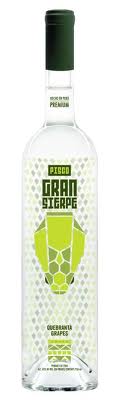
What’s trending? Pisco. First I read about Supreme Court Justice Elena Kagan enjoying a Pisco Sour at a local establishment; then twice more, someone or other was noticed to be sipping it; I think one might have been Justice Antonin Scalia. I’ve read that, as trending goes, Pisco could be the new Mojito. Or for D.C. foodies, the new Mumbo Sauce.

According to PR Web, Pisco consumption in the United States increased 101 percent in 2010. Whether or not that’s a legitimate trend would depend on what it was in 2009, or 2008. I was always taught that a trend is at least three data points.

I haven’t tried this Peruvian potion, Pisco. Heck, I’m not sure I even know what it is. One source I consulted says it’s a brandy while another calls it a spirit. We have a knowledgeable guy at our local liquor store, but I’m afraid that if I went in asking about Pisco, he’d laugh, sigh, roll his eyes or all three.

If he did, I’d know it’s already trended.

In a piece on Monday, Slate cautioned us to not hate Pisco because it’s fashionable.

I don’t think I’ll be serving up piscopolitans any time soon.

8 Comments

Filed under All Things Wordish, Food, Marketing/Advertising/PR, News, Technology and Social Media

Super coincidence

Darn you, Stephen Colbert.

On Tuesday I had jotted a blog idea on the back of an envelope and had only to fill it out. This, you recall, was the day the nation’s policymakers approved the creation of a Super Congress of 12 members, to hammer out solutions to the federal budget crisis later in the year.

I had outlined some thoughts about the notion of a “super” Congress. My mind spun the notion into a “Super-duper” Congress, beneath an “Über” Congress. I swear I wrote this, even if you don’t believe me.

As I fleshed out the outline in a hotel room Tuesday night, I flipped on Comedy Central for a little bedtime snack of super-reality.

I found Stephen Colbert interviewing New York Times Washington bureau chief David Leonhardt. Near the end of the interview, Colbert recited the very notes I had just typed in. Great minds.

You’ll notice, if you follow the link to the interview, you might or might not experience a problem with the audio. On one computer, I could get the audio; on another I could not. I did a search on “why can’t I get audio on Comedy Central?” and learned that plenty of people experience this same technical glitch.

Among them is a young person whose conservative father has cut off all of his/her access to Jon Stewart and Stephen Colbert; this young person was trying to find a work-around.

As a parent of a former sneaky teen, I sympathize with well-meaning parents who want to control access to inappropriate content. But The Daily Show and The Colbert Report? Seriously?

So, I correct myself. Not “Darn you, Stephen Colbert.”  So he unknowingly stole my idea. He got there first. Plus, he has a few more followers than I do. He has millions. I have hundreds.

I say, “You, go, Stephen Colbert. You’re a super, a super-duper, even an über role model.”

Oh, and I’m not even going to bother with “Satan sandwich.”

2 Comments

Filed under All Things Wordish, Movies, Television and Radio, News, Politics, Technology and Social Media

El plato ostentoso

I gather the Spanish gastronomic community is deeply mourning the closing of El Bulli restaurant. For 50 years in Catalonia, El Bulli created culinary inventions that inspired chefs worldwide.

If you like food or if you like Spain, read The New York Times story about El Bulli; you’ll be captivated. During the short time I attended university in Spain, I lived on dorm food and bread and cheese. Oh, to have had the chance to go back with a little jingle in my pocket to indulge in some real cocina española.

If you like food and the words that describe it, check out Slate’s recent piece on the names of El Bulli’s menu offerings. This one caught my eye; then kept me entertained for way too long.

We’ve talked in previous posts about the wording of restaurant menus, about which you shared some of your favorites, some with tongue in cheek, hold the beef.

In the Slate piece, Jeremy Singer-Vine muses that dishes bearing such names as “Irish coffee of green asparagus and black truffle jus” cry out for satire.

Singer-Vine took the names of some 1,200 El Bulli dishes and created a technological algorithm that generates satirical sound-alikes. Though it’s not quite ready for the Wii, you can go online and play a guess-the-real-name game.

Because we have talked recently about simple versus pretentious language, I thought you might enjoy this timely diversion.

It also got me thinking about the name of my signature dish. 

In my social circles, I’m known for my pesto torte. It wasn’t mine originally, but because I have no one to whom to attribute it, and because I’ve made more than 50, and because I don’t know anyone else who makes it, it’s mine.

The problem is, when I say “pesto torte,” no one ever knows what it is. It’s fair to say some people know neither pesto nor torte.

My son’s girlfriend calls it “cheese loaf.” And you know what? That’s exactly what it is—cheese stuffed inside cheese, prepared in a loaf pan (layered with enough other ingredients to almost justify the fancy name).

I took one to my aunt and uncle’s last weekend. As I was setting it on a platter, someone said, “It’s beautiful; what is it?”

I said, “Pesto Torte,” which didn’t tell anyone a thing.

“What does that mean?”

I threw the question to my son’s girlfriend who said, “cheese loaf.”

Aha. Everyone knew immediately. Kind of like in My Big Fat Greek Wedding: “It’s a bundt.” (After several rounds about, the realization, “Oh, it’s cake!”)

In El Bulli’s defense, who’s going to pay 50 euros for a glass of asparagus juice?

2 Comments

Filed under All Things Wordish, Food, News, Travel

Fancy schmancy

A reader contacted me this week to help water my dry spell and to seek my views on the question of pretentious writing.

She offered four examples of what she believes are showy words used by “stuffy” writers; some, she claims, are without meaning. The word samples she offered were penultimate, eponymous, jocund and diktat.

Of those, I knew two.

I saw a Facebook or Twitter post  recently that said, “Never use a long word when a shorter one will do,” a quote I believe is attributed to George Orwell.

It’s a good piece of advice, but I’m not sure I buy into it 100 percent.

Sure, I believe it’s always good to use simple language to get one’s point across. Often the fewer syllables the better. At the same time, I delight in learning new words—and using them. I was once told by an employer to quit using phrases the average Joe wouldn’t know right off the bat. I’m still a little grumpy about that.

My everyday stainless steel flatware, which I bought at Sears in 1984, still works just fine. But every now and then, I enjoy getting out the Reed & Barton silver. It’s as ornate and showy and unnecessary as any fancy language thrown about in The New Yorker. But it’s there and it’s beautiful. Why not use it?

My reader cited The New Yorker’s review of the movie Larry Crowne as she pondered the necessity of diktat, which I learned is a harsh penalty. The review said, “During Larry’s midlife crisis, the world is little more than an extended version of the cheerful diktat that disaster is merely opportunity in disguise.” I think that’s a stretch. Perhaps I misunderstand the definition. I’m going with the reader on this one.

Jocund is a nice word, though I’ve never used it. I might try it out, the next time I need to describe someone who is marked by lively mirthfulness. Come to think of it, I might prefer lively mirthfulness.

Eponymous, giving one’s name to a tribe or place, isn’t a word for which I’ve ever had a need. You?

Penultimate means next to last and I remember the day in college when I first learned it. I find it quite descriptive and know of no synonym. I’m keeping it.

However, I would vote penultimate most misused.

The note from the reader got me thinking about words people misuse when they’re being pretentious; I have a couple of examples. To these people, never use a short word when a longer one will do (even if you use it incorrectly).

I’ve heard people use penultimate as if it meant super-ultimate, or the very best. I once heard a person say, “They have the penultimate thick crust pizza.” That might be true, if there is one left in the oven.

A colleague once apologized to me for putting me in “an awkward juxtaposition.” 

I bet you have some funny examples of your own, or responses to my reader who wants to know, why all the fluff?

In the meantime, I come back to silverware. It’s okay to break out the fancy knives and forks for the right occasion, as long as you put them in the proper places on the table. And provided you’re not using them just to show off and make your guests feel uncomfortable.

15 Comments

Filed under All Things Wordish, Reading