
On several occasions recently, I’ve made a mental note to look up a specific rule of grammar pertaining to comparative and superlative adjectives. As is often the case, once I go searching, I find it’s not that easy.
 In elementary school, these adjectival forms were presented in a nursery rhyme beginnig with “Good, Better, Best.” If it weren’t for the fact that I often hear the superlative used incorrectly, I’d say there’s no need for a refresher. (Better, the comparative, pertains to two items, as in “She is the older of the two children.” Best, the superlative, pertains to three or more, as in “He is the tallest boy in the class.”) I’ll come back to violation peeves in a moment, though I’ve griped before.
Here’s the use about which I was uncertain. Maybe you know.
Is it “one of the more…” or “one of the most…” and is there a difference? Finding a definitive—and authoritative–answer has taken deep mining.
To the ear, or my ear anyway, “one of the more” seems incorrect, simply because there are likely more than two nouns being compared. Without thinking too hard, I’d be inclined to say “one of the most.”
In fact, I was editing something yesterday when I came upon “one of the more” and changed it. Oops?
As I always do, I combed through my various style guides and grammar books and found nothing firm on the subject. However, I did read through volumes of online debate.
Some of the word usage bloggers insist that “one of the biggest” is absolutely incorrect, but I found their logic a bit flimsy. Others argued to the contrary.
I invite your comments on the subject. Does either comparative or superlative prevail when following “one of the” and why? Your opinions are welcome, but I’d really appreciate it if you’d cite your sources. Please don’t support your position with the notion that the other one sounds funny. We all know there are plenty of correct phrases in English that sound funny. As much as we might wish otherwise, not sounding funny is no basis for grammatical correctness.
Back to basic comparative and superlative, I wish people with two children stopped referring to one as the oldest and the other the youngest, when one is the older and the other the younger. Easy enough.
One blog I read cited lexicographer H.W. Fowler‘s assertion that exceptions can be made for idioms. I’m not sure I buy into that.
For example, if comparative (the –er form of an adjective) applies to only two, then why do humans put our “best foot forward?”
Likewise, why do we strive to have “the best of both worlds?”
This is one of the things that most keep me up at night. Or is it more?
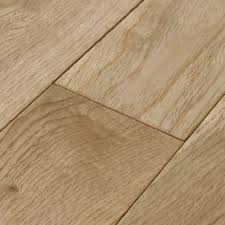 The one my father brought to my attention oh, so long ago: “It fell between the cracks.” Think about it. “Between the cracks.” To fall between the cracks, or slip between the cracks, has come to mean that something was lost—by slipping into a tiny space. Say you drop a small object on the floor. If it slips between the cracks, it’s not lost at all. Why? Because what’s between the cracks? The wood. Even though “between the cracks” is commonly accepted, what we mean to say—and should say—is “through the cracks.”
 Word Nymph