Category Archives: All Things Wordish

grammar, punctuation, usage, spelling, speech

Leading nowhere

It’s Monday and presumably we’re all rested up and ready to face the work week. While you’re enjoying that first cup of coffee and reviewing your calendar, maybe before you step into the Monday staff meeting, how about a word challenge?

Who plans to write at least one press release this week? As the first quarter draws to a close, corporate communications types will be busy crafting earnings releases to be issued in early April. Maybe you’re working on your organization’s annual report. Whether you’re a one-person shop or member of a sales team, sometime this week you will likely tell someone what your organization does, for whom and how.

Sadly but necessarily, we’ll all use the same tired words we’ve been using for decades. In all the years I’ve been involved in helping organizations describe what they do, I haven’t managed to climb completely out of the word rut.

Think for a moment about how you would say, in two sentences, who your organization is and what it does. Say it out loud or write it down. Or look at your company’s mission or boilerplate statement.

Notice whether what you wrote—or what your employer has already written—uses any of the following words: “leading” (or “leader”), “solution,” “innovative,” “premier” or “state of the art?”

If so, then the good news is that you’re not alone. The bad news is that you’re not alone. This basically means everyone else is making the same claims you are. I do it too, and I can honestly say that I’ve written or repeated all of these words for the organizations I’ve represented.

Last week, Ragan’s PR Daily reported the 25 words most commonly used in press releases. These were culled by PR strategist Adam Sherk, using an aggregation tool that, from what I could gather, did not pick up boilerplate language.

The list won’t surprise you, but perhaps it will get us all thinking of how we might choose better words to express what we do and why we do it better than anyone else.

For example, if we all say we’re leading, then is anyone really leading? What is premier, exactly? Whether we make wireless routers or nose hair clippers, peddle consulting services or plumbing services, how innovative or state-of-the-art are we, really?

“Solution” topped the list, appearing 776 times in a 24-hour period.  I once worked for a computer services company that once told its tens of thousands of employees to refrain from using the word “solution” because it implied that its customers had “problems.” It makes you wonder how many problem-free customers comprise the target market for any service provider.

I’m not here to offer magic synonyms, at least not today. I’ve not even sure synonyms are the answer. Otherwise, we’re going only as far as “foremost,” and “ground-breaking.”

Are there more meaningful words, or expressions of ideas, from which to choose, or do we need a whole new vocabulary for this young decade altogether?

I plan to give this additional thought and I encourage you to do the same.

Who can produce a compelling lead paragraph or boilerplate statement, for a real or fictitious press release, that does not contain any of Sherk’s top 25 words? There might be a prize for the most ground-breaking entry.
2 Comments

Filed under All Things Wordish, Marketing/Advertising/PR

Comforting words

The Today show yesterday ran a segment on a subject dear to my heart. Entitled “What Do You Say?”, the piece focused on selecting the right words to say to someone experiencing a crisis.

There is no question that it can be awkward to be on the receiving end of bad news from a friend or colleague who has just lost a job or a loved one or is facing a frightening diagnosis or a failing marriage, and then be expected to respond with the right words.

We all mean well, but sometimes we misstep. Many people are natural-born fixers, so they want to say something to fix the problem, make it go away or distract the person from his or her troubles. Others are minimizers; they want to show the person that the problem is minor in the overall scheme of things. Some people find a way to make it about them. We all want to be helpful, but we all don’t have the guidance we need from the experts. Therefore, I applaud Today for getting the subject out in the open.

I began thinking about this 20 years ago, after experiencing a series of personal losses. At my lowest point, one of my closest friends, meaning well, responded, “I guess it just wasn’t meant to be.” That was the last thing I wanted to hear, and yet, she meant to offer comfort. I’m sure I’ve made similar blunders.

That’s when I began paying attention to how we console the ailing. Six years ago, I received training to become a hospice and bereavement caregiver, which turned out to be the most valuable education I’ve received.

If I had to boil all I’ve learned over the years into a few tips, I’d offer the following.

DO say “I’m sorry,” but try to avoid too many other sentences that begin with “I.” In other words, don’t tell the person how hard the news is on you. It might be better to say, “This must be very difficult for you.” It’s about the person in crisis, not about us.

DO offer help, if you are sincere, but be willing to back up your offer with action. If possible, be specific. Perhaps offer to take one’s children for an afternoon, fold a load of laundry or pick up a few things at the store.

DO offer a sympathetic ear, and make yourself available for a visit. Offer to take the person out, but make sure it’s not for the purpose of getting his or her mind off the problem necessarily. A distraction might be welcome, but so might the opportunity to talk. Let the person set the agenda and don’t invite other people who might inhibit candid conversation about the crisis at hand. It can be painful for the person to sit there and pretend nothing’s wrong.

DO listen. Let the person talk and don’t feel that you must always respond with words. Sometimes silence is the best gift.

DON’T say, “I know how you feel.” You might have been in a similar situation, but each person’s circumstances and feelings are different–and deeply personal.

DON’T respond immediately with stories of others you know who have gone through difficulties. If you do, try to avoid sharing outcomes.

DON’T trivialize the person’s troubles. To him or her, it’s everything right now. Don’t point out how things could be worse or that it must be happening for a reason or is part of a plan.

DON’T say any anything that begins with “At least…”

Anyway, these are just a few tips I’ve gathered. Perhaps you have more?

8 Comments

Filed under All Things Wordish, Family and Friends, Health, Movies, Television and Radio

Them’s fightin’ words

A recent piece in the Chicago Tribune caught my attention online. Columnist Heidi Stevens asked readers which words they believe are most likely to start a fight. This wasn’t about let’s-step-outside kinds of  words. She wanted to know: Over which words will people go to the grammatical mat?

It’s probably a safe bet that anyone reading this blog has, at one time or another, gone fist to cuffs, in the verbal sense, over proper word usage.

What got my attention about the piece is that it began with a word over which I once lost a bet. I’m fairly sure I’ve told you this story. I once bet my husband that “irregardless” could not be found in the dictionary. It can. The way I should have phrased the bet was that “irregardless” is an incorrect form of “regardless.” Foolish me.

Stevens cited other examples I’d seen cause disagreements, including “adverse” versus “averse” as well as another one I had to have hammered into me long ago by an editor. I should have known better, but I learned my lesson and never forgot it. As an editor myself, I’ve turned around and taught it to quite a few writers. But not before going to the mat on it. It has to do with the word “comprise.” A whole is not “comprised of” its parts. The whole “comprises its parts” or it “is composed of” its parts. “Comprised of” is incorrect. I was 30 before that one sank in.

Arguing about grammar and word usage can be thorny. Many of us are accustomed to correcting people, especially if we are editors. It’s our job. We aren’t always accustomed to having our edits challenged. I’m not sure I’ve ever argued with an editor, but I have learned good lessons from several.  (I did have a manager once who hated the word “it” and edited it out of everything I wrote.)  It’s interesting to see how arguments progress until one party produces hard proof. (I used “it” four times in that paragraph. So there.)

I tell you, many of the subjects we’ve addressed here have sprung from disagreements. Being proven wrong is one of the best ways to learn; I know.

My advice: Don’t hesitate to engage in debate about words. Just be sure your argument is phrased in such a way that your position can be supported by a source you and your opponent both trust. Irregardless.

Note: Earlier I wrote “fist to cuffs.” I looked it up and found several alternate spellings, including “fisticuffs,” “fisticuff” and “fist-a-cuffs. Anyone?

Another note: This is a tricky week for Word Nymph. If, among the planes, trains, automobiles, weddings, funerals and business trips, an entry isn’t posted promptly, please be patient. Today’s is my 300th post. Surely there are one or two in here you haven’t read yet.

11 Comments

Filed under All Things Wordish

The big tournament

All eyes are on the big tournament. That great American competition that captures national attention this time every year. It’s time to see how your predictions will play out.

No, not the run-up to the Sweet Sixteen. It’s the official American Crossword Puzzle Tournament, held this weekend at the Brooklyn Bridge Marriott. If only Word Nymph had the forethought to apply for press credentials.

Following opening ceremonies last night (not exactly the Olympics, but a nice wine and cheese reception), the bloodfest begins this morning at 11:00.

Throughout the day today, contestants will complete a series of six crossword puzzles against a ticking clock. Then tonight, look out! It’s Games and Quizzes Night, featuring “The ACPT-zing Race,” a puzzle version of television’s “The Amazing Race.” Then it’s “Life Is Shortz,” a one-act crossword play named for New York Times crossword editor Will Shortz.

Tomorrow morning, there’s a talent show by Tournament contestants and officials, followed by the championship playoffs, in which the top three contestants in three divisions compete in sudden-death rounds on giant grids. NPR’s Neal Conan and Washington Post crossword editor Merl Reagle will give live, play-by-play commentary on the final rounds. I’m all aquiver.

The top prize is $5,000 but the real thrill has got to be just being there for it all. Or even getting to meet  Shortz or Reagle in person. You can compete online for $20, but then you miss the excitement and pageantry of the event.

Yesterday I decided that, if I can’t get a press pass for next year, maybe I’ll try out as an amateur. On the ACPT website, there’s a sample puzzle that’s supposed to give prospective competitors a sense of  their worthiness. Apparently, if you are able to complete it in 15 minutes, you would be competitive at the tournament. A time of under 10 minutes would be excellent.

As part of my usual bedtime ritual, I set out to work that very puzzle, timing myself, to gauge my aptitude. After the pretend starting buzzer sounded, I sped through the clues, surprised to find them so easy. Alas, I stopped after 18 minutes, after answering only 68 of the 74 clues.

Truly, I am a faithful amateur. There hasn’t been day in the last 10 years that I haven’t worked a puzzle, though I’m years away from being an expert. There are certain rivers and playwrights whose names I’ll never commit to memory. But I love good wordplay and find nothing more satisfying than breaking the code on a Sunday grid and laughing out loud at the cleverness of the masters.

How cool would it be to cover the tournament live for this blog next year?

Leave a comment

Filed under All Things Wordish, Sports and Recreation

Three little words

A new trend has just popped up on Twitter and it’s popping so fast I’m having trouble tracing its path. I believe it originated with Maria Shriver. At first I thought it was corny but, once I dug down, I struck treasure.

Tweeters all over are each sharing three words by which they live. It’s called “threewordstoliveby” and is intended to get people thinking about how they would capture their personal philosophies in just three words.

I took a scroll through about a hundred of them and tried to decide what mine would be.

To be sure, there were plenty of clichés: Live, laugh, love. Eat, pray love. Family, friends, faith. Those are nice, but they’ve been done. After all, the point is for them to be uniquely individual.

Some were raunchy. Some were extremely raunchy. Some were hedonistic: Scotch rocks now.  Bacon or die. Some were narcissistic.

Some folks couldn’t do it in three words: Lock the back door. Be concise.

First I thought mine would be Laugh yourself silly. Not very original, but it suits me.

Unable to come up with a meaningful and unique string, I found several that I wish I had:

  1. Peace, love, panic
  2. Failure isn’t permanent
  3. I ignore ignorance
  4. Know your role
  5. Think then talk
  6. Duck fat hashbrowns

Yes, the triquetrous credos are supposed to reflect our individuality. If that’s the case, I just found myself half a dozen new Doppelgängers.

By what three words do you live?

17 Comments

Filed under All Things Wordish, Technology and Social Media

Say what?

You gotta love Paula Deen. She’s a word nymph’s dream, blessherheart.

As a celebrity chef, she’s not my favorite. She lays it on a little thick for my taste—everything from the abundance of saturated fat to the exaggerated drawl. (Please let it be known I appreciate the difference between an accent and a drawl.)

I try to love her, really I do. Largely, it’s that I have trouble getting past her mispronunciations and speech gaffes.

For the record, “vinaigrette” has three syllables. It’s vin-ai-grette. Not vin-e-gar-ette. She’s not alone; restaurant servers aplenty mispronounce the salad dressing. Actually, Paula stretches it to five syllables, splitting the last one in two, like a generous slice of her pink lemonade cake.

But another goof in the same episode as vinaigrette got me thinking of another common mistake that we haven’t talked about here. She said she greases the pan to “assure it doesn’t stick.”

Shall we go over “assure” versus “ensure” versus “insure?” It must be confusing to some, so let’s give it a shot. Those who already know this can skip ahead to today’s assignment.*

Insure: to guarantee against loss or harm. The diamond is insured against theft. Think “insurance.”

Ensure: to make sure. I will grease the pan to ensure the cake doesn’t stick. Think: I drink Ensure to ensure I get enough nutrients.

Assure:  to inform [someone] positively. “Assure” almost always, if not always, precedes an object. I assure you, it will not happen again. The doctor assured him the drug was safe. Think: Rest assured. (you, implied, are the object)

Pretty simple.

*What, besides vinaigrette, do you find to be the most common food mispronunciations? In the meantime, here’s one person’s take. Note another Paula citation, for stretching “paprika” to four syllables. Good, I’m not the only one who counts.

7 Comments

Filed under All Things Wordish, Food, Movies, Television and Radio

Double trouble

Exactly when, or how, did Doppelgänger spring into popular consciousness?

For a word that originated as early as the 17th century, hovering below the radar for hundreds of years, it seems to have crashed back in to popular language quite suddenly.

When I first noticed people on Facebook putting up pictures of their celebrity doubles a year or so ago, I should have picked up on the Doppelgänger phenomenon, but didn’t. I sat that one out anyway, not because I was unfamiliar with the Doppelgänger (which I was), but because I don’t think I have a celebrity double necessarily. I’ve been told I look like Mary Crosby (She shot J.R.), Marsha Mason, Helen Hunt, Laura Linney and Stockard Channing, none of whom look at all like each other.

Since the time Celebrity Doppelgänger Week was last celebrated on Facebook, I’ve been hearing this quirky word all over the place. It was kind of like kerfuffle, which seemed to lie low for years before becoming a fad.

Doppelgänger has come to be synonymous with evil twin, alter ego and clone. But where did it come from? It’s not easy to say exactly, because there are many meanings and, as best I can tell, many origins. In fact, it seems even the Doppelgänger has a Doppelgänger.

It can mean an omen of danger or death; a hallucination of one’s own image out of the corner of one’s eye, sometimes as a result of electromagnetic stimulation of the brain; looking in the mirror and seeing two faces; a mythological apparition of evil or just someone who looks very much like someone else.

There are references to Doppelgänger in poetry and literature, as well as historical references going back hundreds of years in the United States and Europe.

If you’re interested, I encourage you to go out and learn about each culture’s interpretation. Or perhaps you already know all this and I am the one who is late to the party.

Make mine a party of six—my five Doppelgängers and me.


5 Comments

Filed under All Things Wordish, Movies, Television and Radio, Reading, Technology and Social Media

Name that car

People have no doubt written about this before, but it has only recently gotten my attention enough to give it more thought.

Lately, I’ve spent a lot of time on highways, where there tend to be a lot of cars, and have realized something.

It used to be that cars had words for names. Many were named for real or mythical creatures. Falcon. Jaguar. Cougar. Beetle. Viper. Thunderbird. Firebird. My first car was a Mustang.

For a while, car names symbolized strong human types: Cavalier. Maverick. Ranger.

Cars were also named for exciting places, like Daytona and Malibu.

Then came a time when inserting a French article made a car seem more exotic: LeSabre. Le Car. LeBaron.

Dodge has been keen on naming cars for objects that represent speed (Dart), fearlessness (Intrepid) and forcefulness (Ram Charger).

I love my car, but wish it had a real name. I drive an Altima. Before that I drove a Sentra. Nissan also makes the Maxima. I’d prefer these be real words: Ultimate, Sentry and Maximum. I don’t know if the Japanese are the ones who first came up with made-up names; they were the ones who also invented Camry, Prius, Yaris and Integra, and introduced the alternatively spelled Infiniti. Honda has done quite well with the Civic and Accord, both nice names and real words with positive associations. Hyundai has the Tucson and Santa Fe, both nice places. Still, made-up names seem to be on the rise. Increasingly, humans are giving their offspring made-up names.

Maybe carmakers have something there. Surely there were countless focus groups that confirmed the appeal of certain made-up words, and it appears from my observations on the road, that these are the cars people are buying. Most luxury car models are beyond words, simply using combinations of letters and digits.

Not one for made-up names for cars or humans, I had to get past buying a car with a nonsense name. I passed up the Accord for the Altima, which I liked far better in the test drive. If I had test driven names alone, I’d have bought the Accord.

How about you? Did your first car have a real word for a name? To what extent did the name factor into the selection of your current car model?

5 Comments

Filed under All Things Wordish, Marketing/Advertising/PR, Travel

Stack’em high

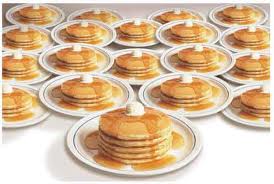
Mardi Gras. Fat Tuesday. Shrove Tuesday. Pancake Day. Sunset on Shrovetide. Whatever you call it—if you call it—it’s here. 

In many Christian denominations, tomorrow is the beginning of Lent, traditionally a season of fasting, prayer, reflection and a healthy measure of self-denial.

But tonight we feast. Whether attending a pancake supper in a church hall, as I will, or stumbling along Bourbon Street in one last bender, trading bare flesh for shiny plastic beads, as others will, this is our last hurrah.

The upcoming Lenten season may be for Christians, but nearly every religious faith seems to observe periods of solemnity and fasting, either preceded by or followed by fun and feasting.

For some people I know, Lent is do-over time for failed New Year’s resolutions. For others, it’s a slim-down for swimsuit season. For retailers, it’s a time for chocolate bunnies and marshmallow Peeps that have been out since February 15th to grow stale on the shelves, as Easter won’t come until April 24th.

I like Lent. In fact, this being one of the latest start dates I can remember, I am eager to get started. I don’t always give up one particular thing per se. I have a favorite daily devotional I’ll read. I’ll think twice before doing anything to excess. I’ll try to introduce more quiet into my day to listen for, well, I’m not sure.

I only today looked up “shrove” because I realized I had no idea what it meant. The first definition I saw said that it was the past tense of “shrive.” I didn’t know what that meant either. Another referred to Shrovetide, which was unfamiliar.

Shrove
1. n shrove, the first day of Shrovetide.
2. n Shrove Tuesday, the last day of Shrovetide, when people traditionally eat pancakes.
3. n Shrovetide, the three days before Ash Wednesday

Shrive [Shriven, imperfect or Shrove, past tense]
1. v to hear or receive the confession of; to administer confession and absolution to
2. v to confess, and receive absolution

Shrive, shrove, shriven, whatever. Aunt Jemima and I are stepping out tonight.

2 Comments

Filed under All Things Wordish, Food, Holidays

In a nutshell

If you could fit your outlook on a bumper sticker, what would it say?

That might be an unfair question, but it’s fun to think about. A living epitaph of sorts, or simply your message to the world behind you.

I enjoy reading bumper stickers. It’s fun to speed up and see how drivers match their sayings.

We spent the weekend visiting our son in Boone, North Carolina, a funky college town about which I’ve told you before. Friday we took a stroll down King Street, had lunch at Our Daily Bread and checked out some of our favorite shops.

My husband’s favorite stop-in is Dancing Moon, a 1960s-style book store, filled with incense, new age music and reading on all things spiritual and counter-cultural. Dancing Moon smells (and, to some degree, feels) just like my childhood.

During our voyages to the Dancing Moon, my husband browses the shelves and chats with the proprietor, aptly a cross between George Carlin and Jerry Garcia. I retreat to my favorite corner in the back, where the bumper stickers are displayed. I pretend I have to select one that represents who I am.

I don’t affix stickers to my bumper. The peace sign magnet I had there at one time had attracted such ire—as well as comments that it was unpatriotic—that I removed it for a while.

I can’t say I was able to select just one bumper sticker on this trip, but here are a few that struck my fancy:

“All the freaky people make beauty in the world”
“Medically speaking, what harm does medical marijuana do to terminally ill patients?”
“Imagination is more important than knowledge”
“Consciousness: that annoying time between naps”
“When in doubt, shut up”
“The truly educated never graduate”
“Peace is patriotic”

What words appear on your life’s bumper sticker?

8 Comments

Filed under All Things Wordish, Quotes, Travel